Turkish Rice Pudding-Baked


Sütlaç is a light dessert originated in Ottoman cuisine. The rumor goes that it was flavored with rose water in palace kitchens, but in my kitchen I skipped that ingredient. If you want to try the original taste, add 2-3 tsp rose water to milk.

1 lt (32 oz.) milk
1/2 cup white rice
1 cup white sugar
1/4 cup corn flour or corn starch

-Wash the rice and boil it with 2 cups of water until water is soaked
-Put rice, milk, and sugar in a pot and stir on low. Keep stirring for 20-30 minutes more after it starts boiling.
-Mix corn starch with a little bit of water until the mixture is smooth. Then, add this mixture to the pot. Stir for 4-5 minutes.
-Now you need to decide whether you want to have regular sütlaç or baked one. If you want regular rice pudding, pour the pudding into bowls and serve cold with cinnamon sprinkled on top. However, if you want baked rice pudding, pick oven safe bowls, put put pudding in them, and then broil them until the top is brown, dark brown. Chill and serve.
-Another way to make baked rice pudding is to mix 2 tbsp of pudding (after you turn off the heat stove) with one egg yolk, and spread this mix lightly and evenly on the pudding after pouring them in bowls. If you broil sütlaç with the eggy mixture on top, you'll have a more flavorsome pudding.

See also Rice Pudding with Gum Mastic

Yogurt Soup


Yogurt soup is a popular comfort dish both in Turkey and Central Asia. To me, it shows how we, Turks, are obsessed with yogurt; we even cook it! It's also a very common sick soup; even inhaling the strong smell of mint or tarragon makes you feel better. Although Turks love this soup, I can see why many people, especially those who are not in good terms with yogurt, may not like this. So, the decision is up to you: to try or not to try...

1/4 cup rice
5 cups of water (if you wish you can use half chicken stock, half water)
2 cups of plain yogurt
1 egg
2 tbsp flour
2 tbsp butter
2 tsp dried mint or tarragon
1 tsp salt

-Boil rice in 5 cups of water with salt until (very) soft.
-In a bowl, beat the egg and flour well, and then add yogurt and mix. With 1-2 tbsp water lighten up this mixture.
-Put the yogurt mix in a pot and start cooking on very low. It's important that you start with low heat, otherwise yogurt would curdle. Give yogurt some time to get used to heat. Cook on low heat for approximately 15 minutes and keep stirring.
-Slowly pour in rice along with water into the soup. Keep stirring. First let it boil on medium and then turn it down and cook for another 10 minutes.
-Heat butter in a pan. Once it sizzles, add mint flakes and stir for 20-30 seconds (don't let it burn). Then, pour it into soup.

Celery Root à la Turque

Who likes celery root? It's a complicated issue. People who think it has a very strong smell can handle celery stalks. And there are also people like me who cannot have even a single bite from celery stalk because of its smell, but love celery root. So you have to try to see if you like it or not. As if having one strong smelling plant is not enough, this recipe requires another one: dill, the odor of which, to some, is less agreeable than many other herbs like fennel or cilantro. Although some fictitious characters like Beavis and Butt-Head use "dillweed" as an insult, the term "dill" comes from an Anglo-Saxon word, dylee, that means to lull or soothe. Strong smells of celery root and dill create a perfect harmony. Celery roots usually look like this when they are not cooked:

White Beans

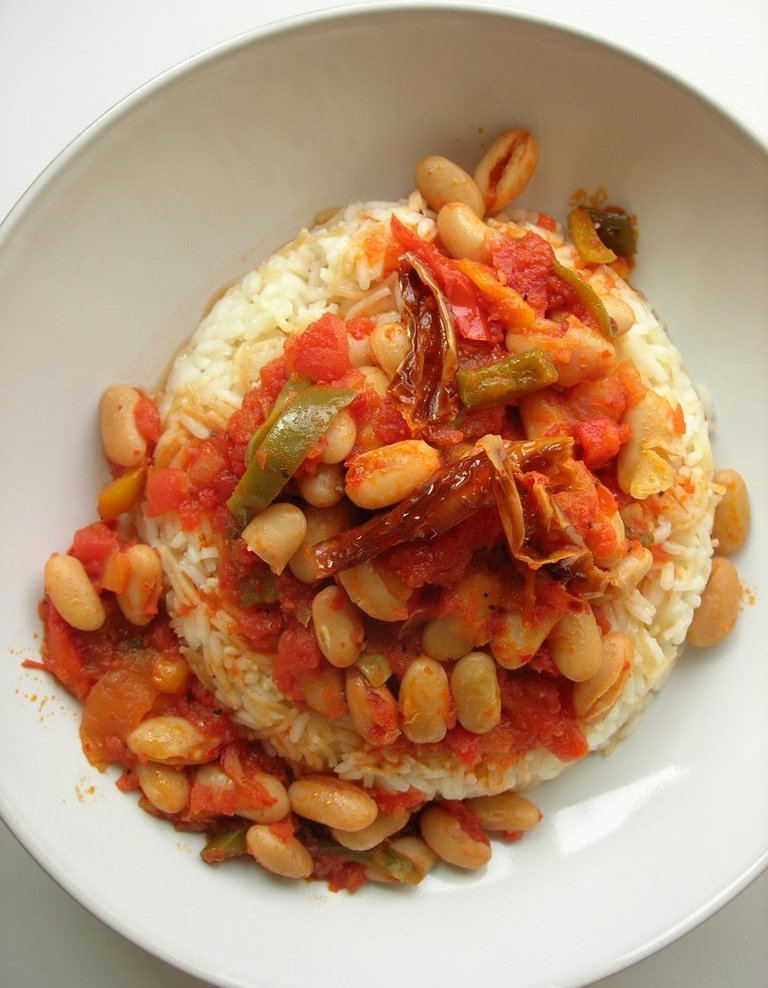
White beans with rice is the traditional Turkish dish. It is to us what pasta is to Italians. If you have pickled vegetables, especially cabbage, with it, you cannot expect more. There are variations of this recipe based on what kind of meat you want to use, or you may completely skip the meat part as I do. You can cook white beans with stew beef or lamb, with ground meat, pastrami (pastirma), and/or soujuk (sucuk, Turkish sausage). My favorite kuru fasülye is with pastrami.
Very traditioanl version of Turkish white beans would definitely have stew meat, beef or lamb, and would probably not have green pepper. Since I wanted to make a vegeterian dish, I replaced meat with peppers.

2 cups of cooked cannellini: white kidney: fazolia
beans
or
even better dermason/whit beans(it's always tastier to use dried beans, but if you'll use canned beans do not forget to rinse them well) or 2 cans of those beans
3 tbsp olive oil or butter
1 tbsp tomato paste
2 onions, chopped
2 banana or red peppers, chopped
2 tomatoes, diced (If you want to use canned tomato, prefer petite diced one)
1-2 cup of water
1 tsp pepper flakes
1 tsp ground black pepper
2 tsp salt
dried chili peppers (only if you like spicy food)


-Soak beans in water over night and then the next day, boil them until soft OR pressure cook dried beans for 35-40 minutes OR use canned beans.
-Heat oil in a pot and sauté onion and pepper until soft: 7-8 minutes. Add tomato paste and stir for another 2 minutes.
-Pour in first beans, then tomatoes, and then water until the water level is 1/2 inch above the beans. Add salt, black pepper, and pepper flakes. Stir once or twice very gently (do not forget the beans are tender now and we don't want to smash them). If you will use dried chili peppers, place them on top. Cover and simmer on low for 25-30 minutes.
-Serve with rice, especially on top of rice. Turkish style white beans are awesome with pickled vegetables like white cabbage, cornichons, carrots, etc.

Wheat Flour Halva (Un Helvası)


There are three different types of halva in Turkey: tahini halva, which is known simply as halva here in the Sates, wheat flour halva, and semolina halva. Tahini halva is usually store-bought; actually I've never heard anyone who made tahini halva. As a matter of fact, I never liked tahini halva which my family highly enjoyed as main dessert after fish dinners. Semolina and wheat flour, on the other hand, are always home-made for funerals or religious days. Moms would make big batches of either semolina or wheat flour halva and send a halva plate with kids to everyone in the neighborhood. Other than funerals and religious days, semolina or wheat flour halva is perfect for midnight sugar-craze. Between two, I've always liked wheat flour better than semolina. It's easy to make wheat flour halva, but it requires arm strength since you need to stir constantly. Here's the recipe for a small batch.

3 tbsp butter
2 tbsp canola oil
1 cup wheat flour
1 cup sugar
2 cups of water
2 tbsp pine nuts

-Start making roux with flour, butter, oil, and pine nuts on low heat. Important: Stir constantly until it turns into a brownish color. Change arms or pass the job to someone else, but stir constantly; you don't want flour balls in your halva. And don't forget; it may take a while.
-In a pot boil sugar and water.
-Once the flour mixture is brownish, pour syrup, one scoop at a time, and stir constantly until the whole syrup is soaked. It will get harder to stir. Turn it off, cover and let sit for 10 minutes.
-With two spoons give halva some sort of spoon-shape and serve!

You can experiment with this recipe by either replacing water with milk or using 1 cup water and 1 cup milk.

Adventure for chocolate and/or coco lovers: add 1 tbsp coco to roux before you pour in the syrup or serve flour halva with chocolate syrup.

Dill-Feta Poğaça

Poğaça, a kind of savory pastry / bread, is a traditional baked good in Turkey and Eastern European+Balkanic countries which at some point in history were under the Ottoman rule long enough to adopt its cuisine. Poğaças are best with (black) tea. In Turkey, people would have them for breakfast from a neighborhood patisserie on their way to work or school, or for afternoon tea time.

Pub Style Bulgur Pilaf

Bulgur pilaf, a highly traditional central Anatolian dish, can be pretty boring, at least for me, when cooked regular way: with only tomato paste, oil, and maybe onions. However, pub style bulgur (my mom calls this recipe pub style, but I have no idea why) is rich in flavor + vegetables, is fun and a wholesome meal on its own.

Turkish Feta-Potato Rolls

Sigara Böreği literally means "cigarette pastry" in Turkish and they are usually deep fried. However, I didn't want to have a heavy snack, so instead I baked them with instructions from my mom.

Yufka, Turkish filo dough, is not as thin as the Greek one that you can find frozen at the stores here in States; it is usually round 15-20 inches in diameter. It is not easy to find Turkish filo dough here, but the Greek one is too thin and delicate for me to handle. So I decided to go online; the Turkish filo dough I used for these cigarette pastries is available at Tulumba.

1 pack of Turkish triangle filo dough (there were 28 pieces)
1/2 cup olive oil
2 tbsp yogurt
2 eggs (put aside one egg yolk to brush the tops)

for stuffing
2 medium size potatoes, peeled and boiled
1/2 cup crumbled feta
1/3 bunch parsley, finely chopped
1 tsp pepper flakes (optional)
1/2 tsp black pepper (optional)

black seeds
sesame seeds

-Mash the potato, feta, parsley, and spices with the back of a fork (you can use only potato or feta for stuffing. you don't need to salt the stuffing if you'll use feta, but if not, make sure you salt it)
-Mix olive oil, yogurt, and 2 eggs(-1 egg yolk; we're saving one egg yolk for brushing). Put one layer of filo dough and brush with the mixture. Put the second one on top and brush it again (not to have dry pastries, we need two layers of filo dough wetted with oily yogurt sauce). Place one spoonful of stuffing on the wide side of filo dough. Fold the sides and roll. (Wet the tiny end with the yoogurty sauce if it doesn't stick) Place them on a greased oven tray.
-After you roll all of them, beat the egg yolk that you set aside. Brush it on top of rolls and sprinkle sesame or black seeds, or both.
-Bake in a preheated oven at 375 F for 20-30 minutes until they're golden brown.


If you want to try them deep fried, you don't need the olive oil+yogurt+egg sauce. Take only one layer of filo dough, put the stuffing, roll, and deep fry it in a ligther oil like vegetable, corn, or canola oil until golden brown. ( Wet the tiny end of filo dough with water to stick) Place on a paper towel to soak excessive oil.

These pastries are good for breakfast or/and with tea. They're good for storing for emergencies, too. Just put them in the freezer seperately until frozen, then gather them in a bag/box until they're needed.

I don't know if you like savory and sweet things together, but you should try dipping your cigarette pastry in any kind of jam (my favorite is cherry), which is, I guess, a very Thracian thing to do in Turkey.

Ezo the Bride Soup

Ezo was a real person who lived in the south eastern part of Turkey, close to Syrian border, in early 20th century. She had two miserable marriages, and died in Syria, homesick. There are films based on her hard, unfortunate life. But I have no idea why this soup is named after her.

The most important trivia about Ezo Gelin soup is that you cannot find a single Kebapçı (Kebab Restaurant) in Turkey that doesn't serve this soup. It's the best starter before kebap-you have to have the soup, and whatever you do at home, Ezo Gelin soup is always better at a Kebapçı, even at a sloppy one. Also, it's famous for being a perfect hangover cure, after Tripe Soup (İşkembe Çorbası).

Zucchini with Beef and Garbanzo Beans

I saw this recipe in a Turkish food blog, chez Ayşenur, and immediately decided to make it. Garbanzo beans and zucchini: how could it be bad? It certainly is delicious. Ayşenur says that this is a local recipe from Kilis, a city in Turkey near the Turkish-Syrian border.

2/3 cups of garbanzo beans
1/2 pound stew beef (I preferred beef but y0u can also use lamb)
2 zucchinis, medium size cut in half-rounds
2 tbsp olive oil
1 onion, chopped
2 banana peppers or 1 bell pepper, chopped
1 tbsp tomato paste
1 tbsp spicy pepper paste
3 cloves of garlic, minced
juice of one lemon
1 tbsp dried mint flakes

-Soak garbanzo beans overnight. The next day cook garbanzo beans and stew beef in a pressure cooker with 5-6 cups of water for 45 minutes. If you don't have a pressure cooker, then you should cook them for at least an hour or until the garbanzos are soft. Or if you want to use canned garbanzo beans then cook them for approximately 30 minutes (until the beef is cooked). Take the garbanzos and beef out and keep the water; do not throw it away.
-In a big pot heat the oil and add onions and pepper. Stir until they're soft.
-Add the tomato and spicy pepper paste, stir for a couple of minutes. (if you cannot find spicy pepper paste, just use tomato paste and pepper flakes)
-Now it's time to add garbanzos, beef, and zucchini. Add 3-4 cups of the water you saved from garbanzos and stew beef. Salt to your taste. Cook for 30-40 minutes or until zucchini is tender on low.
-Mix minced garlic and lemon juice and stir in when zucchini is cooked. Simmer for 2-3 minutes and turn it off. Sprinkle dried mint , cover, and let it sit for 10 minutes before you serve. You won't believe how tender the beef will be.

Ayşenur suggests that it should be served with bulgur pilaf. I have a bulgur pilaf recipe, but it would be too flavorful for this. You can also serve it with white rice. But if you want to try it with bulgur, here's how to make a simple bulgur pilaf: Heat 2 tbsp butter in a pot. Add bulgur and stir a minute (the ratio of bulgur you will use to water should be 1:2). Add 1 tbsp tomato paste (or more) stir for another minute. Add water and salt, bring to a boil, and then cover and cook on low until bulgur soaks the water.

Zucchini with Rice


Light zucchini dishes are the best for hot summer days. This one has been one of my favorites with yogurt on the side since my childhood. Since it's cooked with olive oil you can have it cold, too. I don't like to cover the flavor of dill and mint, so I don't use tomatoes or tomato paste. If you want some color in your zucchini dish, add 2 grated tomatoes or 1 can of petite diced tomato before zucchini. Let it cook for 3-4 minutes and then add zucchini and water. With rice, mint, and dill it appeals even to those who don't like zucchini.

5 medium size zucchinis, scraped and cut in 1/2 inch quarters
1 onion, chopped
3 cloves of garlic, sliced
2-3 tbsp olive oil
2 carrots, cut in quarters
1/3 cup white rice
1/3 cup fresh mint, chopped or 2 tbsp dried mint flakes
1/2 bunch dill, chopped
1 cup water
salt and pepper


-Heat oil in a broad and shallow pot. Saute onion, carrot, and garlic until soft.
-Add zucchini and water.
-Wait until it starts boiling and then add rice (If you add rice before it boils, then rice turns mushy).
-Add salt, pepper, pepper flakes (optional), and mint.
-Cover and simmer on low until rice is cooked, approximately 25 minutes.
-Add dill after you turn it off.
-You can serve it warm or cold. It goes well with yogurt and fresh bread.

This summer recipe with fresh mint and dill is for Kalyn's Weekend Herb Blogging which is hosted by Anh of Food Lover's Journey.

Antalya Bean Salad


Piyaz
is what we call bean salads in Turkey, but the term is actually Persian and means "onion." Piyaz is usually prepared with northern beans and kneaded onion; dressed with olive oil and vinegar; spiced up with pepper flakes; and decorated with tomatoes, parsley, and hard-boiled eggs. Depending on the region, piyaz might have green onions or sumac. However, in Antalya, a beautiful city with magnificent beaches and historical places on the Mediterranean coast, piyaz is made differently than the rest of Turkey. The difference is tahini and garlic, which, to my surprise since I'm not a great tahini fan, enriches the taste incredibly. In Tekirdag, my hometown, piyaz is served always with Tekirdag Meatballs. However, with tahini it can be a main dish as well.
2 cups of cooked northern beans
1 onion, cut finely in half-moons
1/2 cup parsley, finely chopped
1 tsp crushed pepper
1 or two hard boiled eggs, sliced
1 tomato, diced

1/4 cup tahini
1/4 cup vinegar
1/4 cup lemon juice
2 cloves of garlic, minced


-Soak the beans over night. Bring them to a boil and then on medium heat cook them until soft. Or use canned beans.
-In a bowl mix tahini, vinegar, lemon juice, and garlic for the sauce/dressing. It shouldn't be too runny or thick. Since different tahini brands have different density, it's hard to find the perfect mixture. If the dressing you make with the measures above is thick, add some of the water that you used to cook the beans or use the juice in the can. If it's runny than you can thicken it with more tahini.
-Pour the tahini dressing over the beans and mix them well.
-Slice the onion thinly julienne style in half moon shape. In a bowl knead it with 1 tsp salt. Rinse.
-Mix the beans with onion and parsley.
-Decorate the bean salad with tomatoes and slices of hard-boiled eggs.
Back to top