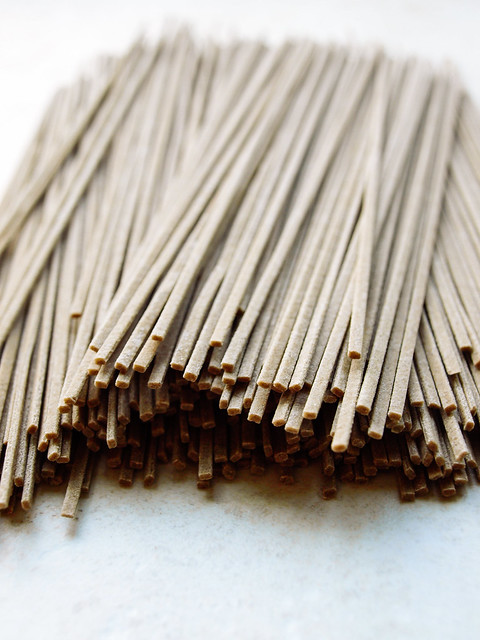
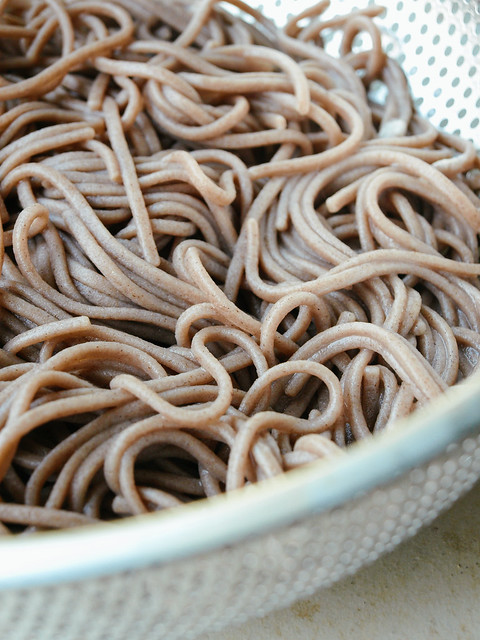
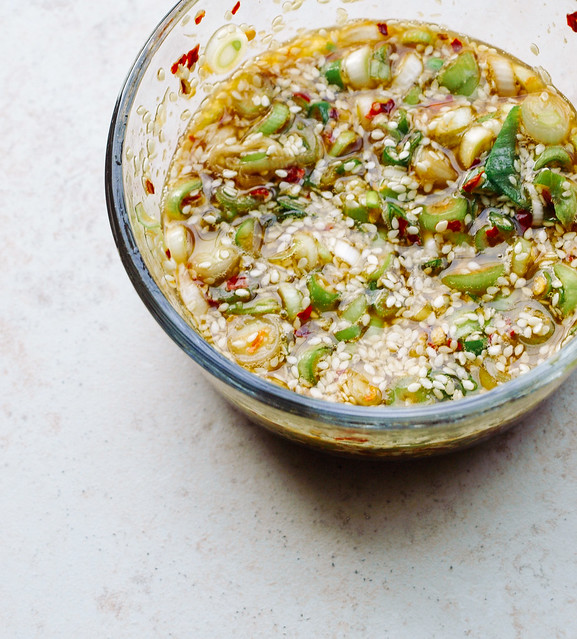
ROASTED VEGETABLE MISO SOUP + SOBA NOODLES

ROASTED VEGETABLE MISO SOUP + SOBA NOODLES

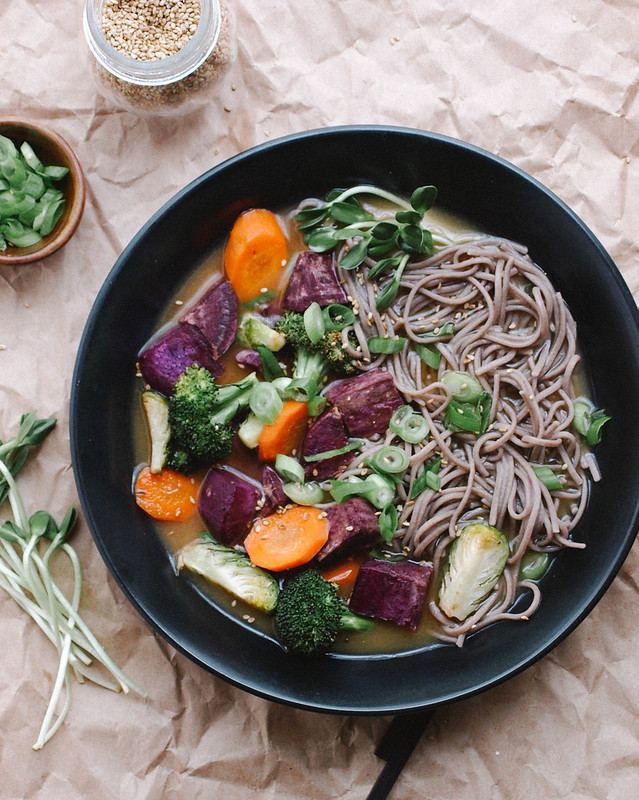
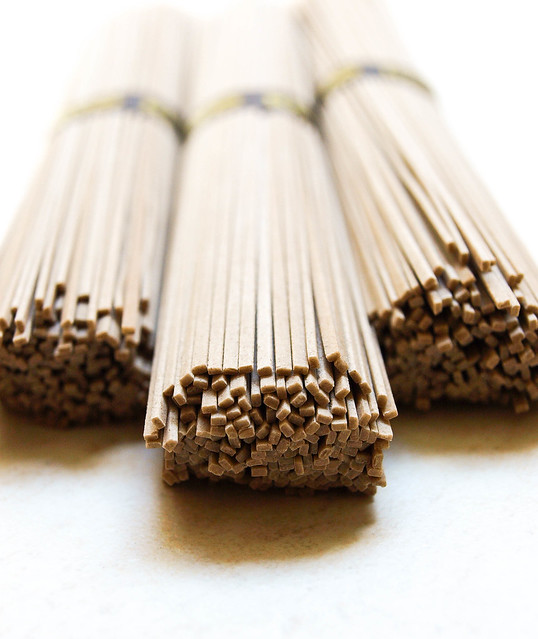
Soups really have been a big part of my winter meals, although I've been really loving a few new vegetables bowls that I'll be sharing soon! They're so easy to throw together and will last me a good day or two. This soup happened to come about as a combination of ingredients I've never had together. It was something I threw together on a whim. I shared my first attempt here (this one looks better) and thought it was ultimately good enough to make it to the recipe collection. So here it is! It fits my criteria for being simple to pull together, has versatility and is fairly well-balanced. Now, I know that roasting vegetables and serving them in soup is not really typical but I'll be darned if it didn't taste great and make my life simple. I gently roasted them just until softened, about 20 - 25 minutes. It helps to cook your vegetables faster if they're chopped on the smaller side. You don't have to use all the vegetables I have here either, maybe just 3 of the 4 opting between the broccoli or brussels sprouts. I wasn't sure what direction I was going to go in, using the broccoli or brussels sprouts and decided to just add them both using 4 vegetables. Suits me perfectly! The miso broth is super simple. I'm in love with red miso at the moment (it's robust & flavorful) but you can use your favorite. You may even like to add a tablespoon or so of tahini to the broth for something different. Making the miso broth as suggested with keep the integrity (health benefits) of the miso paste at it's highest. The soba noodles are easy too and cook pretty much the same as any other noodle. Add some freshness to the soup with sliced scallions, a few greens and cilantro if you have it on hand. A dash (or two) of sriracha isn't a bad idea either! And if you feel the need for some added protien, add a serving of cubed organic tofu (firm or extra firm). If you have a few veggies left over, save and serve them with a grain like rice or quinoa and a protein like lentil or beans (or make more soup!). Enjoy this soup....it's filling, flavorful and easy. Win, win, win!
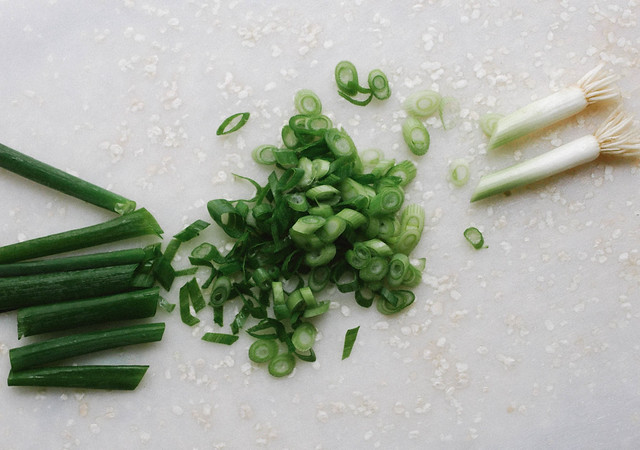
ROASTED VEGETABLE MISO SOUP + SOBA NOODLESROASTED VEGETABLE MISO SOUP + SOBA NOODLESROASTED VEGETABLE MISO SOUP + SOBA NOODLESROASTED VEGETABLE MISO SOUP + SOBA NOODLESROASTED VEGETABLE MISO SOUP + SOBA NOODLESROASTED VEGETABLE MISO SOUP + SOBA NOODLES

ROASTED VEGETABLE MISO SOUP + SOBA NOODLES

Ingredients
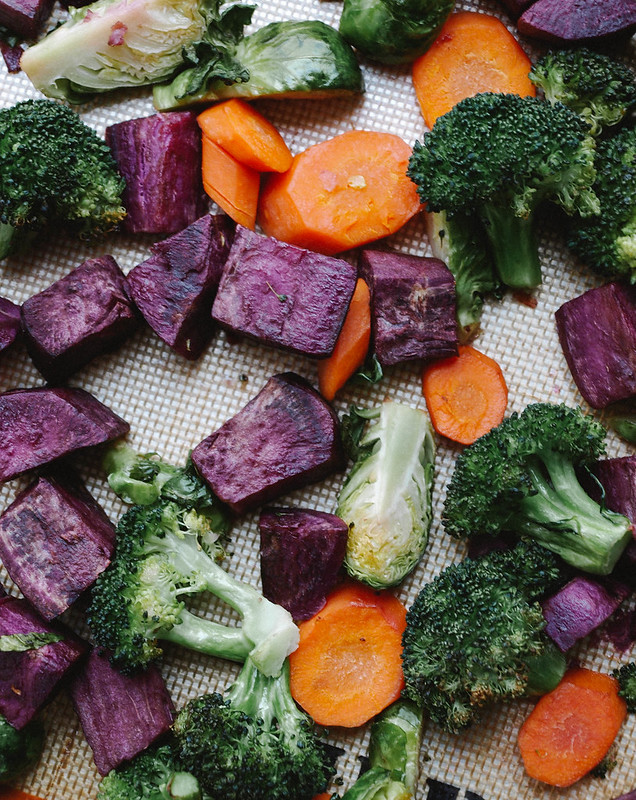
  • 1 purple sweet potato (or any color), peeled and cubed 
  • 2 carrots, sliced
  • handful brussels sprouts, quartered
  • handful broccoli florets
  • drizzle of sesame, olive or grapeseed oil
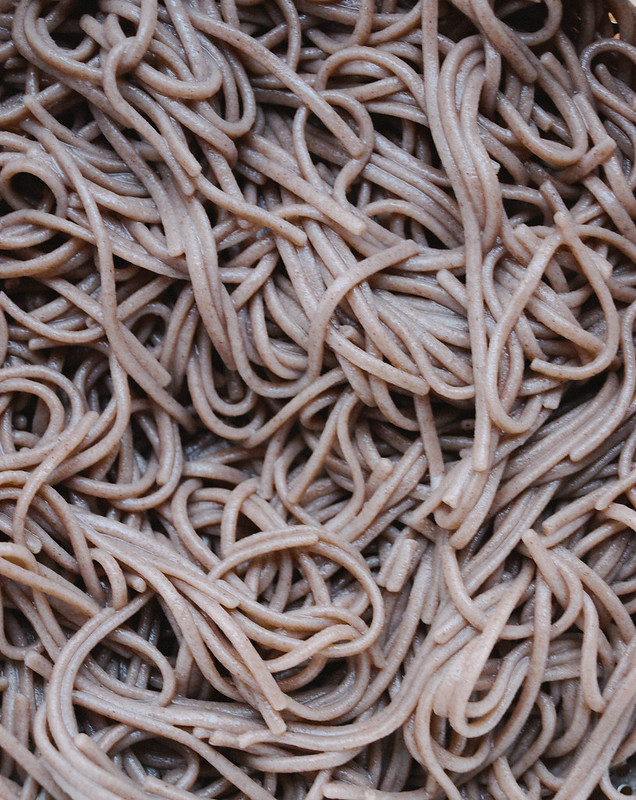
  • 1 package 100% soba noodles
  • 5-6 tablespoons miso (I used red, use your favorite)
  • 4 cups water
garnish
  • 2 scallions, sliced
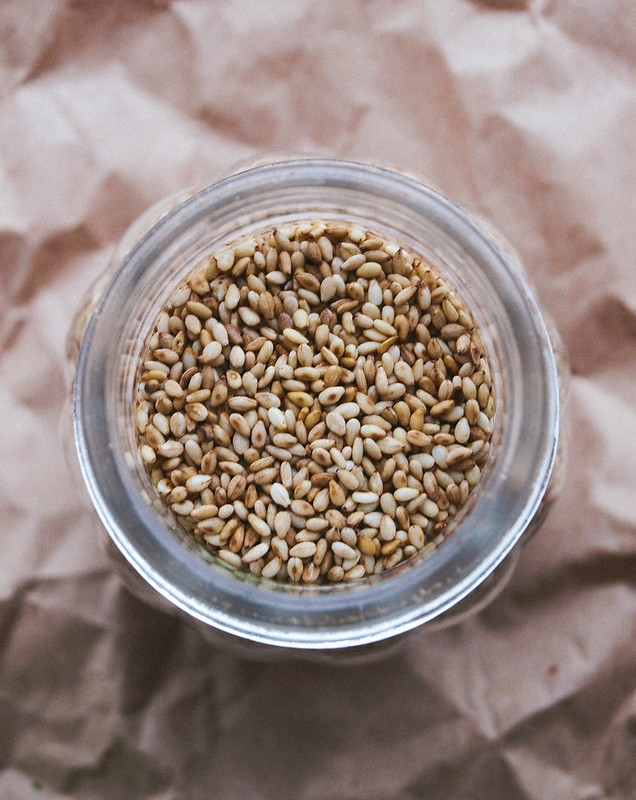
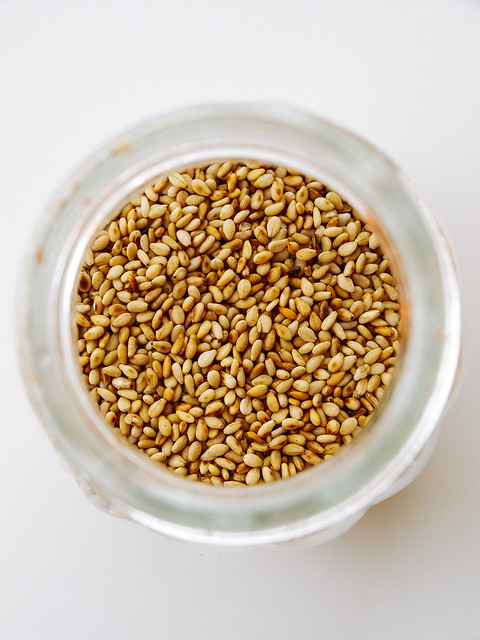
  • toasted sesame seeds (raw black and/or white are great too)
  • handful of shoots, sprouts or greens and/or cilantro

Preheat oven to 400 degrees F.

Prepare vegetables and place on a large rimmed baking sheet that's lightly greased or lined with a silpat or parchment paper. Add a drizzle of oil and toss well. Add a sprinkle of salt over top. Place sheet on the middle rack and cook for 20-30 minutes stirring every 10 minutes, vegetables are done when just fork tender.

Cook your soba noodles according to the package directions. Be sure to use a large pot filled just under half way when cooking soba noodles. Once the noodles have come to a boil, the water tends to foam up quickly and overflow (ugg, I've learned from experience). Pay attention and reduce the heat as needed to prevent the water from boiling over while keeping the water at a gentle rolling boil.

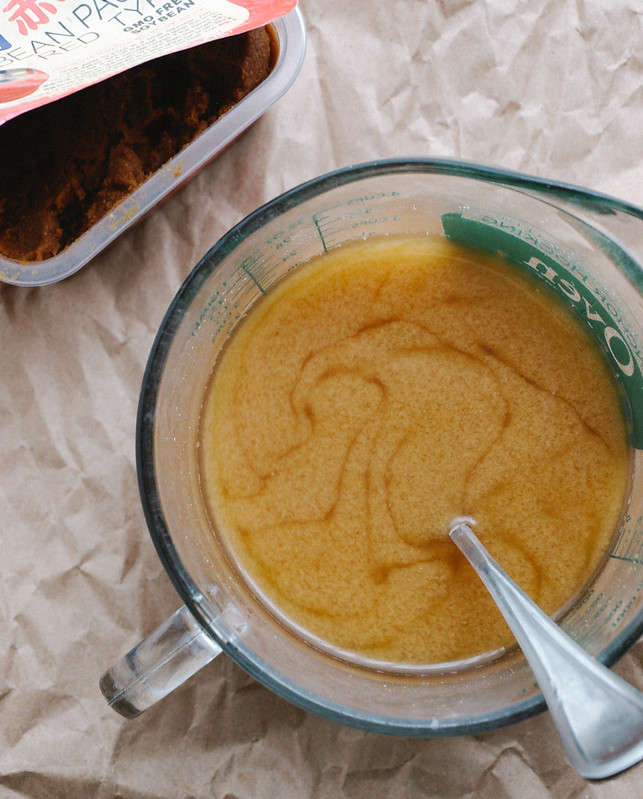
For the miso broth, heat your water until nicely warmed, but not boiling, in a small pan or use the pot the noodles were cooked in. Remove from heat, add miso and mix until miso is dissolved. For me, I fill my 4 cup measuring cup using my hot water dispenser, add the miso and mix (works great for me!). 

Add noodles and vegetables to your serving bowl, top with broth and add a few of the garnishes. Some other optional garnishes would be a dash or two of sriracha or red pepper flakes.

Serves 2-3.

Notes:

Try adding a tablespoon or so of tahini to the broth for something different.

No need to use all these vegetables, three is enough. You may opt to use either the brussels sprouts or broccoli. My Vegetarian Flavor Bible didn't suggest that broccoli was a match for miso, but I liked it and it's available all year long. You can also try using butternut or kabocha squash in place or along with the sweet potato. I used butternut squash in my first attempt and it was delicous!

The smaller you cube your vegetables the quicker they cook. 

Add a serving of cubed organic tofu (firm or exta firm) for added protein.

For the noodles, it's 4 servings per package but I can easily eat half a package myself which is why I suggest this serves 2-3.
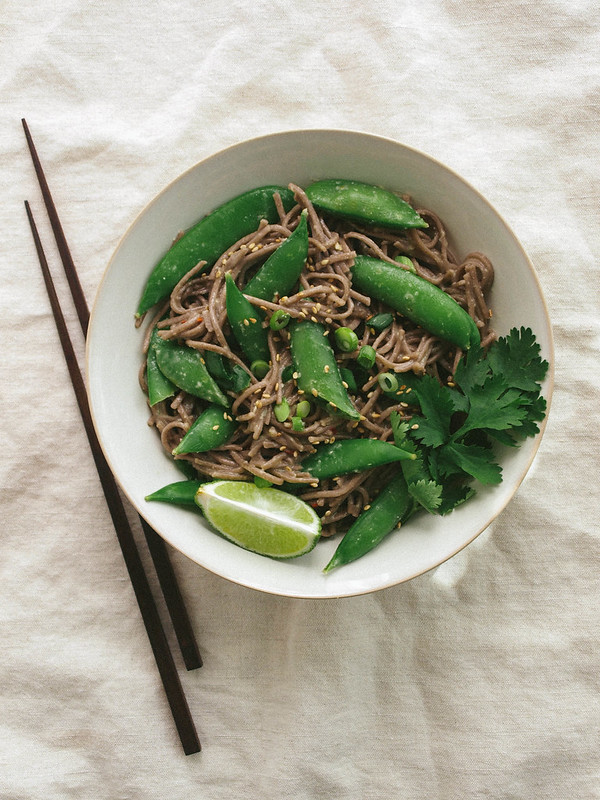
SUGAR SNAP PEA & SOBA NOODLE BOWL + MISO SAUCE

SUGAR SNAP PEA & SOBA NOODLE BOWL + MISO SAUCESUGAR SNAP PEA & SOBA NOODLE BOWL + MISO SAUCESUGAR SNAP PEA & SOBA NOODLE BOWL + MISO SAUCE

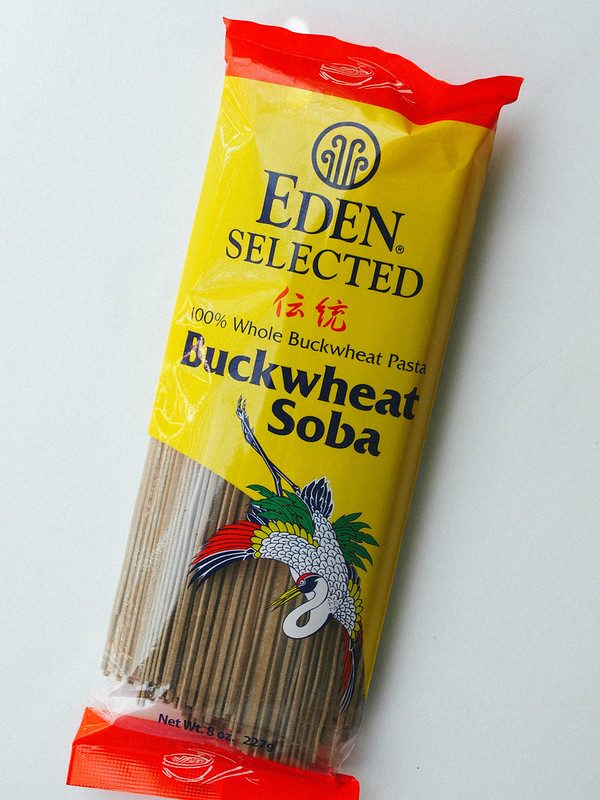
Soba noodles have become a favorite of mine. I love the 100% buckwheat noodles from Eden Foods. They have a nutty flavor with a somewhat chewy texture. Each serving contains 6 grams of protein and 3 grams of fiber. I love that they can be served warm or cold making them a versatile noodle choice. They are gluten free using only buckwheat flour, unlike other brands of soba noodles which use a combination of wheat and buckwheat flours. They tend to be a bit more expensive than the mixed flour soba noodles. I happen to see these noodles as a tradeoff for the more expensive items that I don't purchase anymore such as meat, poultry and dairy. Keeping that in mind, the extra expense doesn't bother me. I hope you may have the same perspective as I do when picking and choosing your plant based grocery items.
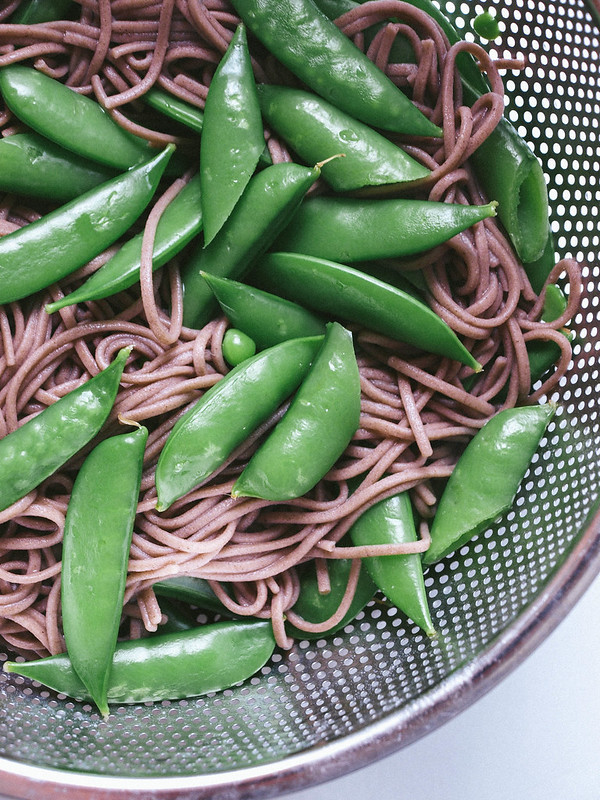
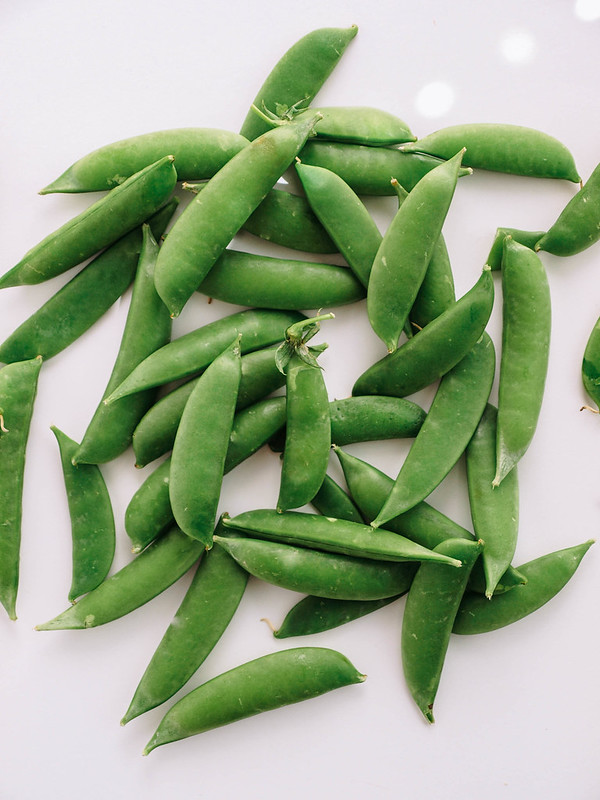
The addition of sugar snap peas add a perfect dose of sweetness and crunch to the soba noodles. I love sugar snap peas and have them often dipping them in hummus and eating as is. In this recipe we will be adding the pods to the soba noodles half way through as they cook to soften them a bit and bring out their greenest green. 

SUGAR SNAP PEA & SOBA NOODLE BOWL + MISO SAUCE
SUGAR SNAP PEA & SOBA NOODLE BOWL + MISO SAUCESUGAR SNAP PEA & SOBA NOODLE BOWL + MISO SAUCE

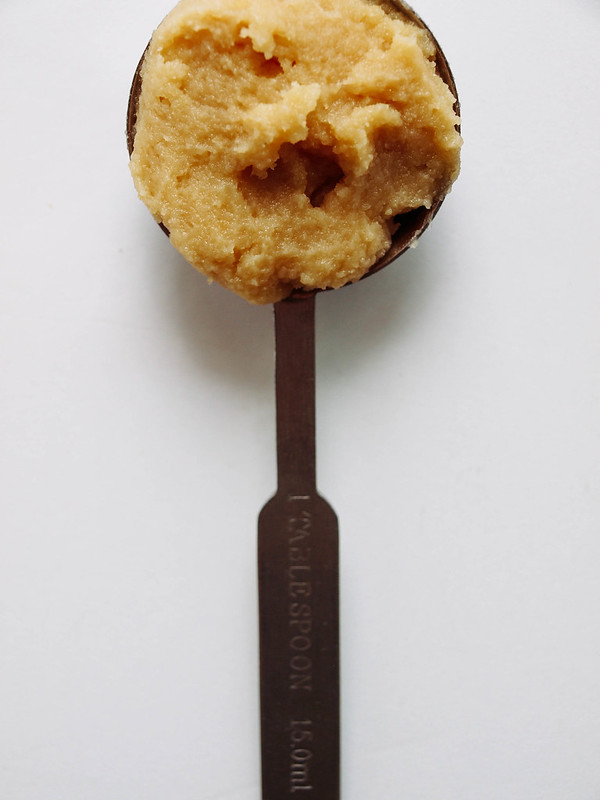
Miso is another great addition to your healthy eating habits. With a few additional ingredients it makes for an easy and flavorful dressing for the noodles and sweet peas. A tub of miso will last up to 9 months + in the refrigerator and can be used for soups, dressing/dips and adding richness to vegan cheeses and sauces. It will go a long way in your kitchen and is a great staple ingredient to have on hand.

This is a very easy meal to throw together and will be ready in about 25 minutes or less. I originally planned on having cubed tofu in this recipe but in the end forgot to add it in for this set of pictures. Feel free to add in a serving of tofu (as per the notes). With or without tofu, enjoy this simple, wholesome and delicious meal! 

SUGAR SNAP PEA & SOBA NOODLE BOWL + MISO SAUCE

SUGAR SNAP PEA & SOBA NOODLE BOWL+ MISO SAUCE

Ingredients
  • 1 package (9oz.) soba noodles
  • 8 oz. sugar snap peas
  • 2-3 scallions (green onions), sliced, to garnish
  • toasted sesame seeds, to garnish
  • handful cilantro sprigs, to serve
  • lime wedges, to serve

Miso Sauce
  • 2 - 3 tablespoons mellow miso paste (white miso)
  • 2 tablespoons rice wine vinegar 
  • 3 tablespoons water, + more as needed to thin
  • 1 inch knob of ginger, grated or minced
  • juice of 1 lime (about 1 tablespoon)
  • pinch of red pepper flakes

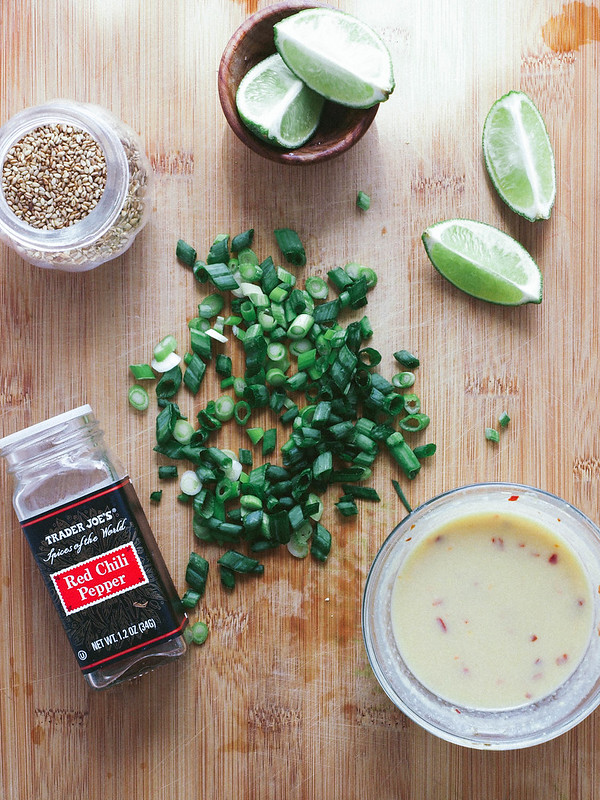
In a small bowl, mix the miso sauce ingredients together, set aside.

Fill a large pot just under 1/2 full of water, bring to a boil, add a pinch of salt and soba noodles, cook 4 minutes. If using 100% soba noodles, careful to watch the water after 2 minutes or so, it will start to become foamy and bubble over...turn the heat to medium and back up again as needed to keep the water at a boil but not boiling over.

2-3 minutes before noodles are done according to package directions, add sugar snap peas to the noodles and continue cooking until noodles are done. Drain and rinse noodles and peas under cool running water.

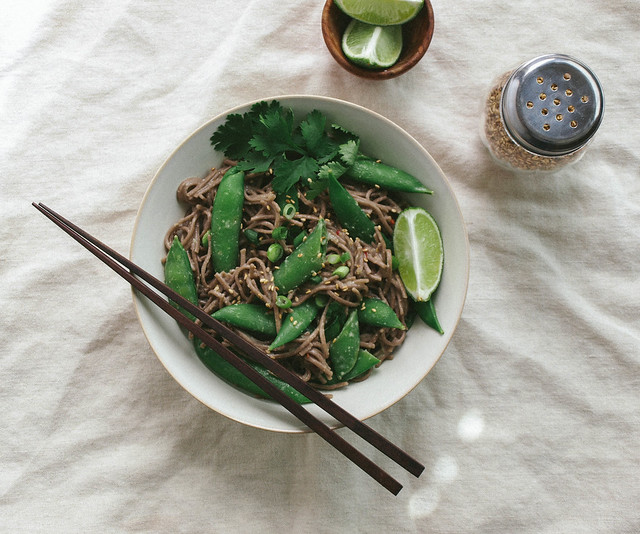
Add noodles/peas back to the pot they were cooked in, add sauce and gently toss to coat. Serve in individual bowls with sliced scallions, sesame seeds, cilantro and lime wedges to squeeze over top.

Serves 2

Notes:

If your sugar snap peas are on the larger side, slice them diagonally in the center to make them easier to eat.

Add in a serving or two of cubed tofu for extra protein if you like...either baked, pan cooked until golden or simply diced from the package. You may even like to add in a serving or so of edamame.

If you have soy allergies, try using other miso's which don't contain soy such as chickpea miso. 


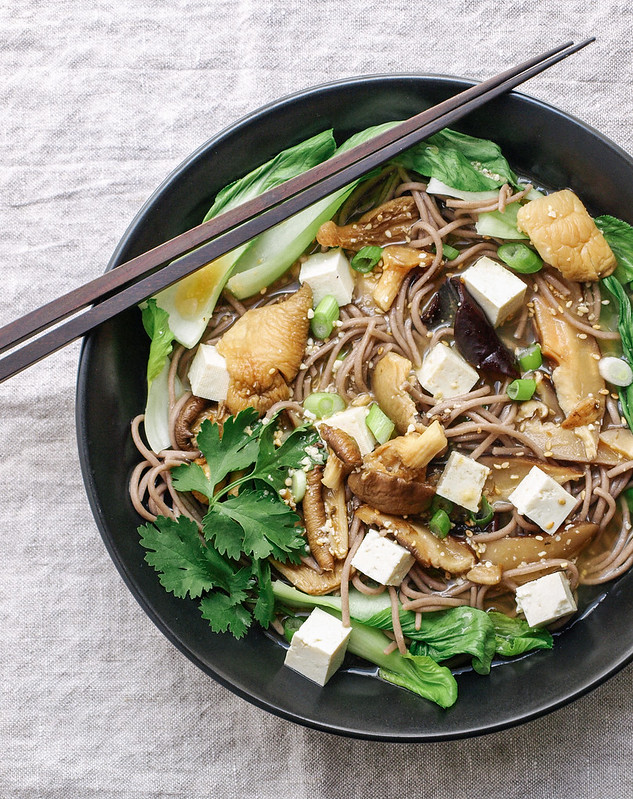
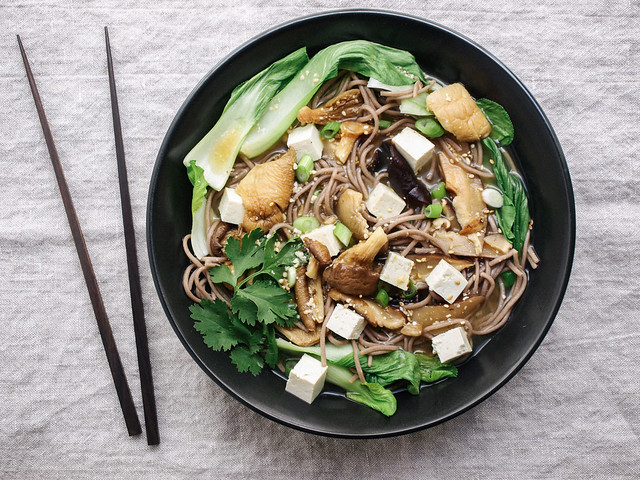
    BOK CHOY & WILD MUSHROOM MISO SOBA NOODLE BOWL

    BOK CHOY & WILD MUSHROOM MISO SOBA BOWL

    I've had my eye on this recipe from A House In The Hills since February of this year. I love her blog and taste in foods! I finally got around to putting my own version together and it's nothing short of delicious! I love every ingredient here and the pure simplicity of it all. It does take more than one pot to cook it all in but it's well worth the few extra dishes. I'm sure you can find a way to streamline my instructions even further to suit your needs and/or make it go a bit quicker if need be. I love this kind of cooking, minimal ingredients that come together creating a satisfying nutrient dense meal. Plus, anything called a 'bowl' and I'm all in! I hope you'll enjoy my version and check out the original too, it's a bit different as it doesn't have the miso soup. Either way you like it....cheers and enjoy your soba bowl!

    Recently updated, in case you're a soup lover, is this Pasta and Bean with Kale Soup. It's super delicious and enough to serve six generously. You'll most likely have leftovers and you'll be glad you did!

    BOK CHOY & WILD MUSHROOM MISO SOBA BOWLBOK CHOY & WILD MUSHROOM MISO SOBA BOWL

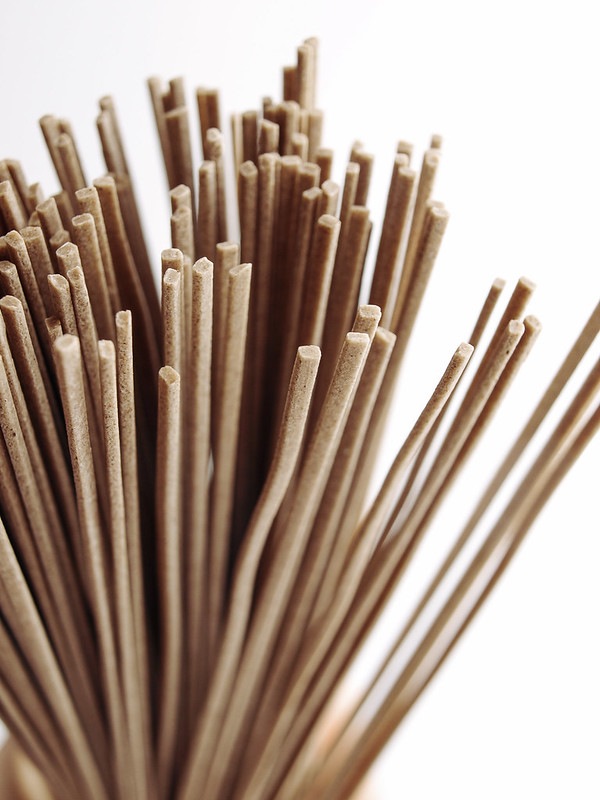
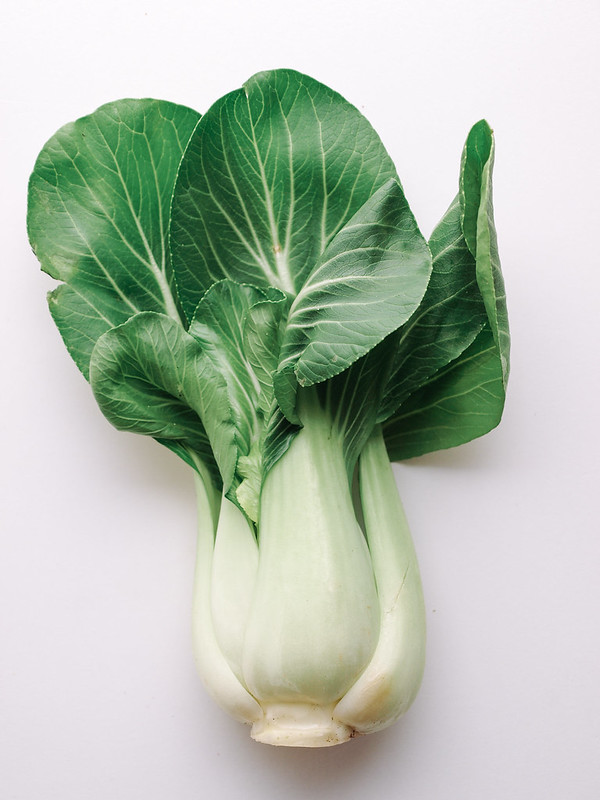
    I used 100% soba noodles but you can use the mixed flour soba noodles if you like. You can even use ramen or udon noodles if you prefer, just know they are not gluten free if you're following that kind of diet. I don't have to follow a gluten free diet but I love soba noodles and do try to limit foods containing gluten. I started using them for their nutritional aspect and came to love their flavor and versatility. The noodles contain 6 grams of protein per serving. I call for 2 servings of soba noodles per person giving you 12 grams. The tofu is optional and will add extra protein, about 9 grams per serving, giving this dish almost half of the the average persons protein requirements. If you decide to not use the tofu, have a protein shake for dessert or somewhere in your day if you feel you haven't met your needs elsewhere. The bok choy is a must here and has such a mellow flavor but I'm sure you can adjust using something else if needed.

    BOK CHOY & WILD MUSHROOM MISO SOBA BOWLBOK CHOY & WILD MUSHROOM MISO SOBA BOWLBOK CHOY & WILD MUSHROOM MISO SOBA BOWL

    I used dried mushrooms here since I have somehow collected three bags of them and decided it was time to put one package to good use. Feel free to use fresh mushrooms of choice, about 8 oz should be good.

    BOK CHOY & WILD MUSHROOM MISO SOBA BOWL

    Red miso is what I had on hand for this recipe, but you can use your favorite or whatever you have available. If you don't have miso on hand, sub in some low-sodium veggie broth. But I recommend having miso handy at all times, it's makes for great broths and soup bases! FYI, it will last up to one year in the refrigerator...a great incentive to add this to your refrigerator staples.

    BOK CHOY & WILD MUSHROOM MISO SOBA BOWLBOK CHOY & WILD MUSHROOM MISO SOBA BOWL
    BOK CHOY & WILD MUSHROOM MISO SOBA BOWL

    BOK CHOY & WILD MUSHROOM MISO SOBA BOWL


    Ingredients (serves 2)
    • 1 package (9oz) soba noodles (I use Eden)
    • 1 package dried wild mushrooms or 8 oz shitake, oyster or mushrooms of choice
    • 3 small bok choy
    • 2 - 3 tablespoons miso (use your favorite)
    • 4 cups water
    • 2 - 4 oz. cubed tofu, optional
    Garnish
    • 2 scallions, sliced
    • fresh cilantro sprigs
    • sesame seeds 
    • red pepper flakes (optional)

    Cook your soba noodles according to package, rinse under cool water, set aside. 

    Meanwhile, in a small saucepan, warm 4 cups of water over medium heat (do not boil), add dried mushrooms, lower heat and let simmer, uncovered for 10 - 15 minutes. Add miso, stir to remove any clumps and continue to keep the soup warm over low heat.

    If using fresh mushrooms, slice into strips, saute them in a bit of sesame oil and splash of tamari for about 5 minutes over medium high heat, add mushrooms to the broth while simmering.

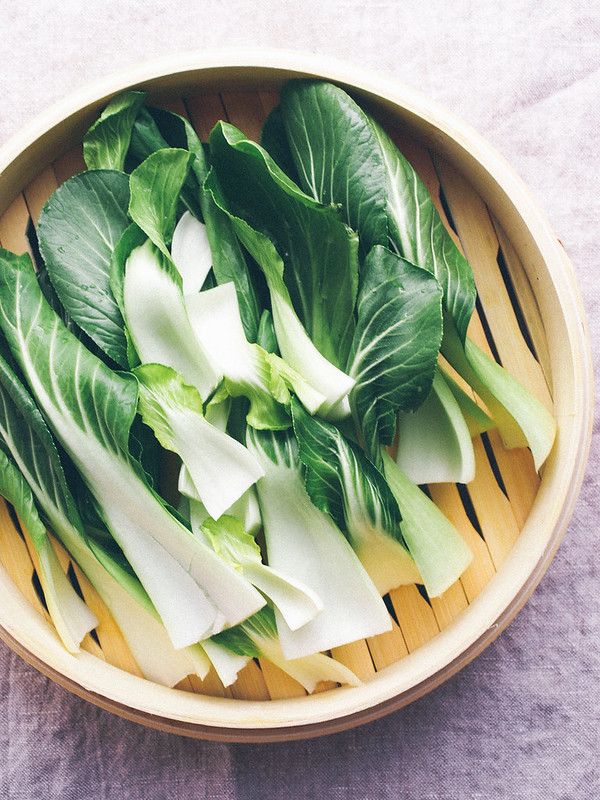
    Steam your bok choy. I used a bamboo steamer with the pot I cooked the noodles in.

    Tofu can be steamed with the bok choy or added to the soup to warm.

    Build your bowl by adding half the bok choy and soba noodles to your serving bowl, ladle 1/2 of the miso broth and mushrooms over top. Top with cubed tofu, scallions, cilantro sprigs and sesame seeds.

    Notes: 

    If you don't have miso on hand, sub in some low-sodium veggie broth. But I recommend having miso on hand, it's makes for great broths and soup bases! FYI, it will last up to one year in the refrigerator...a great incentive to add this to your refrigerator staples.

    A note on the Eden 100% Buckwheat Noodles and their price. It is a bit more expensive than most noodles but from my perspective, I eat basic, cheap foods most of the time so I consider these noodles to be my 'meat' if you will. You can always hunt the internet for cheaper prices and buy in bulk. 100% soba noodles are well worth the price considering I don't spend money on many other food items like cheese, meat, fish and poultry...all of which can cost just as much, if not more. I hope to encourage you to rethink food items and their cost when adapting to new foods...there is a trade off and I much rather spend my money on 100% soba noodles. Feel free to use other noodles as mentioned above.

    Enjoy!


    Mirin & Maple Tempeh Stir Fry

    Mirin & Maple Tempeh Stir Fry

     This is a wonderfully sweet and nutty flavored dish. The tempeh and buckwheat noodles lend to nuttiness and the marinade that was inspired by Nigel Slater gives to the sweetness. I happen upon Nigel's website and found this recipe for a marinade that he uses and thought it would make for a nice tempeh stir fry. I added the tamari and red pepper flakes for my own taste and just pretty much used the ratio of mirin to maple syrup from his recipe as a guide. You could possibly even add some grated ginger or garlic too. I was really happy with the outcome and the way everything came together in taste, color and textures. It's a simple dish that delivers in flavor, protein and other healthy nutrients that we can all use more of!

    Mirin & Maple Tempeh Stir Fry

    Now let's talks about mirin for a moment. I've had my eye on recipes containing mirin but was so turned off by the product because I didn't research online first to find out more about it. Instead, while at the grocery store I made my assumption from the first bottle I picked up and happily put back because it contained corn syrup and other ingredients I prefer to stay away from. Months later I finally find there is a big difference in the way mirin is prepared. The real deal, like the one pictured above, is a traditionally brewed rice cooking wine that doesn't contain added sugar or synthetic enzymes. It’s also known as Hon-Mirin. Very commercial brands use corn syrup and preservatives and are known as Aji-Mirin. They may have their reasons for using corn syrup and preservatives but I will choose the ones that are free of these ingredients. Be sure to read the labels and find, Hon-Mirin, as it will give you the best flavor and add luster to your dishes. Here's a little article from the New York Times about mirin for further reading: Searching For The Real Mirin - Catching an ElusiveJapanese Flavor

    If you can't find this type of mirin in the store, you can order it onlineor you can substitute with dry sherry or sweet marsala if you must. Or you can dissolve a small amount of pure cane sugar in a little white wine or sherry, about 1/4 teaspoon of sugar to 1/4 cup wine. These are clean substitutes for hon-mirin.

    Mirin & Maple Tempeh Stir FryMirin & Maple Tempeh Stir Fry

    We're going to start with the tempeh first. Tempeh is one of those soy products that is good for you and can be eaten in moderation, a couple times a week. Tempeh is fermented and holds all kinds of healthy attributes along with 13 - 16 grams of protein per serving. I like to steam my tempeh before doing anything to it. Because I don't have a double broiler or bamboo steamer, I've made my own steamer by using a colander and medium size pot with lid. It works perfectly well. If you choose this route, you can reuse the pot and colander for cooking your buckwheat noodles. Steaming your tempeh will soften it nicely and the marinade will absorb a bit better. Steam for 10 minutes or so.

    If you can't find tempeh in your usual grocery store, ask the store manager to consider carrying it. This is how change begins on a small scale and it never hurts to ask as they are there for you!

    Mirin & Maple Tempeh Stir FryMirin & Maple Tempeh Stir Fry

    After steaming your tempeh, mix your marinade in a large bowl and add the tempeh, let set for 1 - 4 hours at room temp. Reserve the marinade.

    Mirin & Maple Tempeh Stir Fry

    Bake your tempeh...
    I know what your thinking this is a stir fry! Well, you'll just have to trust me. :) 

    Mirin & Maple Tempeh Stir FryMirin & Maple Tempeh Stir Fry

    Dice your veggies of choice, these just happen to be on hand from my last recipe. Feel free to use whatever vegetables you like, have handy or need to be used up. Other options are bell peppers, broccoli, sugar peas, zucchini...these are what come to mind in a pinch but use whatever your preference is or sounds good. They will be stir fried, or sauteed, until al dente or your choice of firmness and then mixed with the soba noodles if using those. (My favorite wok is the el cheapo carbon steel wok for around $20! It heats up quickly and cools down quickly so your food cooks just right and stops cooking when you remove it from the heat. Just be sure to season your wok well. Here's a great article on the subject: When Cheaper is Better)

    Mirin & Maple Tempeh Stir FP7096187ry

    Mirin & Maple Tempeh Stir Fry 

    Ingredients
    • 8 oz package tempeh (I used a five grain tempeh)
    • 1 tablespoon sesame oil, coconut oil or olive oil
    • 1/3 red cabbage, thinly sliced
    • 2 -3 large carrots, peeled and thinly sliced diagonally
    • 2 -3 scallions, thinly sliced
    • sesame seeds, garnish
    • cilantro, garnish, optional 
    • 8 oz. package soba noodles, or rice would fine too (I ♥ these 100% buckwheat noodles)

    Marinade
    • 1/3 cup mirin
    • 3 tablespoons pure maple syrup
    • 3 tablespoons warm water
    • 2 tablespoons tamari, bragg's aminos or soy sauce 
    • 1 teaspoon red pepper flakes, or to taste

    First start by steaming the tempeh. Use a double broiler, bamboo steamer or do like I did above by using a pot and colander. Bring water to a boil, cut tempeh into sticks about 1/4 inch or so, place in choice of steamer, steam for 10 minutes. This will soften and swell your tempeh a bit helping it to absorb more marinade.  

    In a large bowl, mix together the marinade, add the tempeh and let set for 1 to 4 hours at room temp, turning every so often. Reserve marinade for later.

    When ready, turn oven on to 400 degrees. Bake tempeh on a cookie sheet or in a baking dish for 25 minutes, turning once in between. 

    Cook your soba noodles according to package. 100% buckwheat noodles take 8 minutes to cook while the wheat and buckwheat soba noodles only take 4 minutes to cook. Drain and rinse well under cool water. Set aside. If using rice, cook about 1 dry cup and set aside.

    In a wok or large saute pan, heat oil and add your cabbage and carrots, cook for about 3 minutes, add scallions, a spoonful of marinade and cook another 2 minutes or until desired firmness (I like mine al dente). Add in the soba noodles and cook for another minute or so until soba noodles are gently warmed. 

    To serve, place noodles and veggies in serving bowl and top with a few strips of tempeh. Add a few large spoonful's of marinade over the noodle/veggie mixture and tempeh, top with sesame seeds and a few extra scallions. If using rice, serve rice in serving bowl and top with veggies and tempeh, drizzle with marinade, sesame seeds and scallions. 

    Serves three but more likely two!

    Enjoy!


    Soba Noodles with Tofu, Broccoli & Carrots

    Soba Noodles with Tofu, Broccoli & Carrots
    Soba Noodles with Tofu, Broccoli & CarrotsSoba Noodles with Tofu, Broccoli & Carrots
    Soba Noodles with Tofu, Broccoli & Carrots

    “To keep the body in good health is a duty, for otherwise we shall not be able to trim the lamp of wisdom, and keep our mind strong and clear. Water surrounds the lotus flower, but does not wet its petals.”  ~Buddha

    I've always been hardwired for the healthy lifestyle. I know it's difficult for some to follow this path as they shine in other ways. It's just always been natural for me to gravitate in this direction. Don't get me wrong though, I've eaten my share of  fast foods in my lifetime and still indulge in french fries, potato chips and various other not so healthy choices from time to time. It's just simply that I truly enjoy the good clean foods, the way they taste and the way they make me feel. But I also want to point out that even some healthy foods if over indulged in on a regular basis can cause problems. So as the old saying goes... moderation is key. It is my hope that you all find the recipes within this site to keep you inspired and eating good clean foods for the most part!

    A healthy lifestyle also includes keeping your stress levels down. That is something I've worked on throughout my life. My life my seem a bit dull to most, but it suits me very well at this point in time. I choose to keep my stress levels to a minimum. With mistakes I've made in the past, I do my best to leave them there and pick up the pieces as best I can while moving forward. I have personally experienced what stress can do to the body, and it can be devastating!  I now pick and choose carefully what I let into my life, letting go of the unnecessary baggage. I like the quote by Jonatan Martensson...

    "Feelings are much like waves, you can't stop them from coming but we can choose which ones to surf"...

    I am much wiser with this perspective! We are only human and can only do so much...but what we can do is pay attention to the foods we eat and the thoughts we indulge in. And get plenty of rest in between!

    Soba Noodles with Tofu, Broccoli & Carrots

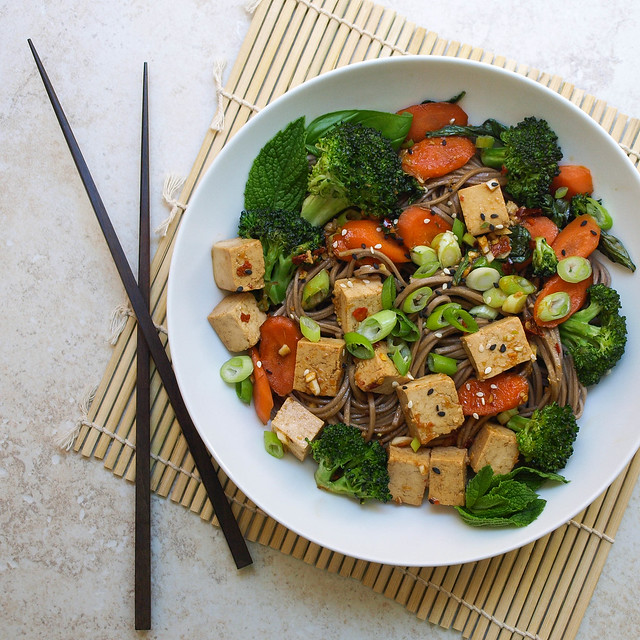
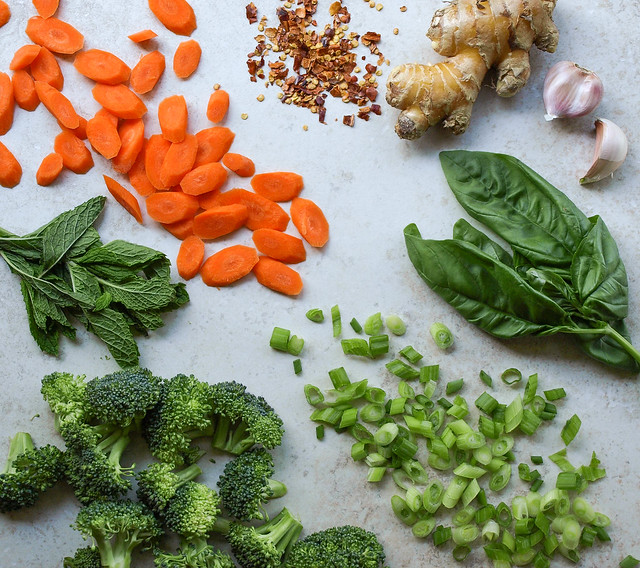
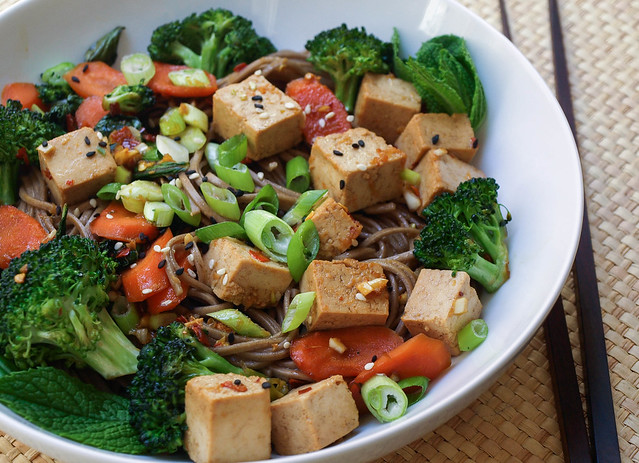
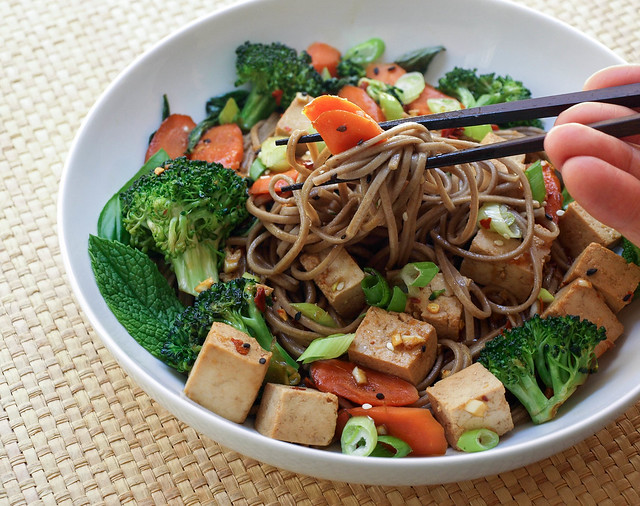
    So today I share with you this lovely soba noodle dish with tofu and vegetables. Tofu is one of those plant based foods that should be eaten in moderation. It is not something that you want to eat on a daily basis. And if you do, keep it in very small portions. But for this dish we are going to enjoy a good dose of this marinated tofu. I find this meal to fulfill many senses. The basil and mint work together well here. Sometimes you get a bite of mint, another time a bite of basil and every now and then you'll get the flavor sensation of both. But by all means use one or the other if you only can find one. The marinade is so good and will make the plain tasting tofu come to life. Paired all together with the soba noodles and sautéed vegetables and this is completely healthy, satisfying and stress free meal. 

    Soba Noodles with Tofu, Broccoli & Carrots

    Soba Noodles with Tofu, Broccoli & Carrots

    Ingredients (serves 3)
    • soba noodles (about 8 oz)
    • 10 oz. extra firm tofu (I used Wildwood), cubed or sliced
    • handful broccoli florets
    • 2 carrots, sliced diagonally
    • 2 scallions, green and white parts, thinly sliced
    • small handful mint leaves
    • small handful basil leaves
    • 1 tablespoon sesame oil, for sauteing
    • white & black sesame seeds for garnish, optional
    • a few fresh basil & mint leaves for garnish, optional

    marinade
    • 1/4 cup tamari, soy sauce or bragg's aminos
    • 2 tablespoons rice wine vinegar
    • 2 tablespoons pure maple syrup
    • 1 tablespoon sesame oil
    • 2 garlic cloves, minced
    • 1 inch knob ginger, grated or minced
    • 1 tablespoon red pepper flakes, or to taste
    • a dash or two of sriracha, optional

    In a medium size shallow dish, combine the ingredients of the marinade.

    Next prepare your tofu. Let me start by saying that I don't drain my tofu when I use extra firm but if you feel that yours is holding a lot of water, you may like to press your tofu between the ends of a double folded dish towel. Either use the palms of your hands or lay on a hard flat surface and set a heavy book on top for a few minutes. Slice or cube your tofu, however you like best. Place tofu in the marinade and let set for at least 20 minutes, flipping every so often. The tofu is meant to be served at room temp straight from the marinade. Feel free to warm the tofu by adding it to the skillet while sauteing the veggies.

    In a medium size pot filled 2/3 of the way with water (or salted water if you wish), bring water to a boil, add desired amount of soba noodles, lower heat to medium high and cook noodles, uncovered, for 4 minutes. When done drain, rinse and set aside.

    In a medium size pan/skillet, heat sesame oil over medium heat, add the carrots and broccoli (and tofu if you would like it warmed), cook for about 3 minutes. Carefully add in a large spoonful tablespoon of the marinade along with the mint and basil and cook for another 2 - 3 minutes. I prefer my vegetables to be al dente and will remove from heat as soon as they brighten in color. Feel free to cook a little longer if you wish.

    Serve soba noodles in individual dishes with marinated tofu, sauteed carrots, broccoli and herbs. Top with marinade, scallions, sesame seeds and additional fresh herbs.

    This can be served warm or cooled. I ate this after taking the photos, it was on the cool side but still absolutely delicious!

    Enjoy!


    Soba & Cucumber Noodles + Sweet Ginger Scallion Sauce

    Soba & Cucumber Noodles + Sweet Ginger Scallion Sauce

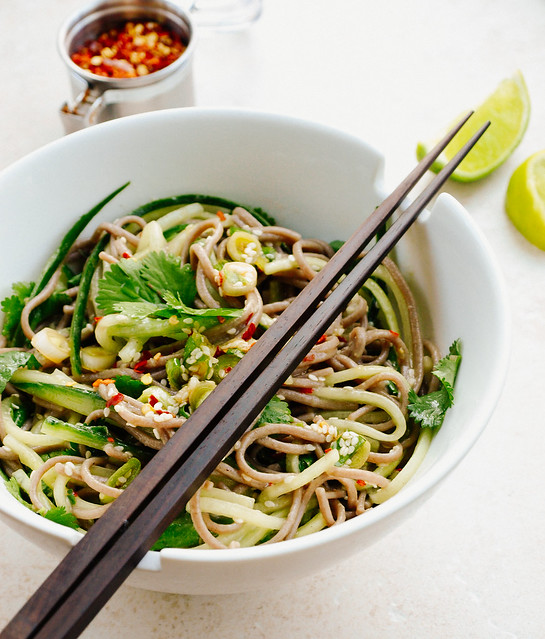
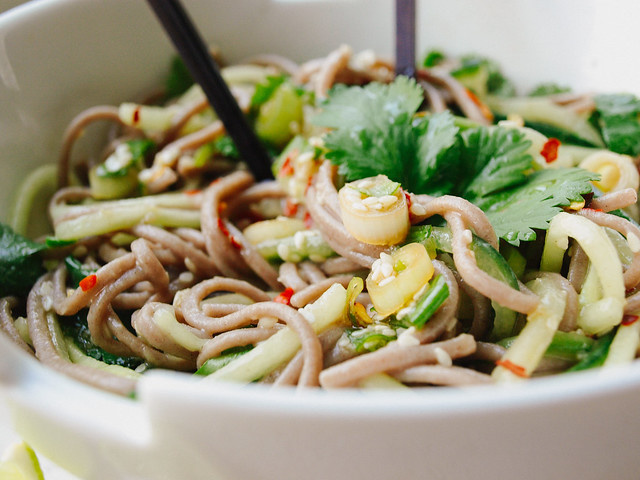
    I love sweet and spicy dishes, this one really hit the spot. I have now fondly adopted the soba noodle and it is now a staple in my pantry. Not only are they delicious, they are full of nutrition. I also discovered they are not related to wheat at all, they are completely gluten free and are actually considered a 'highly nutritious seed'. If your following a gluten free lifestyle then soba noodles will fit in perfectly for you. Just be sure to look for the soba noodles containing 100% buckwheat. I like these from Eden Foods. They cook in the same way other noodles cook, the only thing I would recommend with soba noodles is to make sure to add salt to the water when cooking to really bring out the flavors. I enjoyed this recipe and have made it quite a few times adding my own personal touch each time adapting from the original recipe by Simply Reem. It's sweet, spicy, salty, noodly and refreshing all in one...a myriad of goodness! 

    Soba & Cucumber Noodles + Sweet Ginger Scallion SauceSoba & Cucumber Noodles + Sweet Ginger Scallion Sauce
    Soba & Cucumber Noodles + Sweet Ginger Scallion Sauce
    Soba & Cucumber Noodles + Sweet Ginger Scallion Sauce

    Once you mix it all together...you're ready for a soba sensation!

    Soba & Cucumber Noodles + Sweet Ginger Scallion Sauce

    Soba & Cucumber Noodles + Sweet Ginger Scallion Sauce

    Ingredients 
    • 1 package (9 oz.) soba noodles (I like Eden Foods)
    • 1 large English cucumber, julienned
    • 1/2 cup cilantro, roughly chopped 
    • lime wedges
    • mineral salt & fresh cracked pepper to taste

    Ginger Scallion Sauce
    • 3/4 cup scallions (green onions), thinly sliced 
    • 2 tablespoon fresh ginger, grated or minced
    • 2 tablespoons sesame seeds
    • 2 - 3 tablespoons rice wine vinegar
    • 2 tablespoons pure maple syrup
    • 1 tablespoon sesame, toasted sesame or grapeseed oil
    • 1 - 2 tablespoons tamari, soy sauce or Namo Shoyu
    • 1 - 2 teaspoons red pepper flakes, to taste
    • 1/2 teaspoon sriracha, optional

    In a small bowl, combine the ingredients for the sauce and set aside.

    Cook soba noodles according to package. I recommend salting the water well to really bring out the flavor (I would not usually recommend this but if using 100% buckwheat noodles they will benefit from this...at least I think so).

    In the meantime, prepare your cucumber using a julienne tool. If your cucumber is really long, you can cut it in half before you julienne it if you like. You can also spiralize if you have a spiralizer. Feel free to cut them into 1/4 inch x 1 1/2 inch matchsticks pieces if you don't have a julienne tool. 

    Once noodles are ready, drain well, return to pot they cooked in, add cucumber, cilantro and about 3/4 of the sauce, toss well. In single serving dish, add 1/2 of the noodle mixture, top with 1/2 of the remaining sauce, and salt & pepper to taste. Add as much lime juice as you like. I especially loved the lime and used about 2 juicy ones for myself. 

    A serving of cubed tofu pairs well here.

    Serve warm or cold. Serves two generously.

    Notes: 

    I specify English cucumbers here but 2 -3 Persian cucumbers will work too. Reason being they are much less seedier than regular cucumbers and hold up well to being julienned. Regular cucumbers, the center part once julienned, will be much more delicate because of the seeds. 

    Toasted sesame seed oil is also really tasty in this sauce!

    Adjust any ingredient in the sauce to suit your taste.


    Enjoy!

    Back to top